How Bitcoin Miners Are Becoming AI Infrastructure Companies
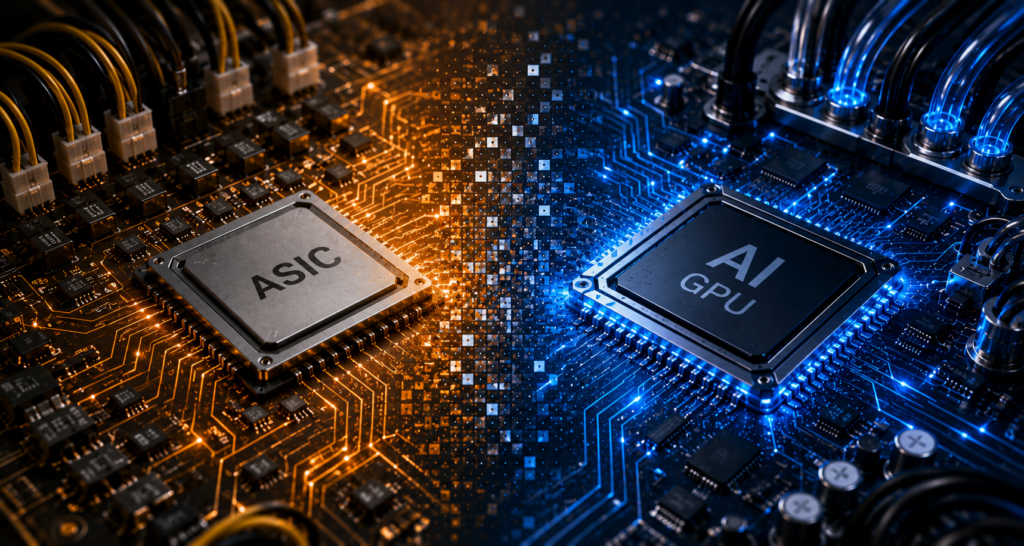
Bitcoin miners used to have one job: secure blockchains. Today, some are discovering a second business that may prove even more valuable: providing the power and infrastructure needed to support artificial intelligence.
The shift makes sense. Bitcoin mining facilities already possess many of the assets AI developers need most: large power allocations, high-capacity electrical infrastructure, industrial-scale cooling systems, and campuses capable of supporting thousands of GPUs. As demand for AI computing continues to surge, those existing assets have become increasingly valuable.
TeraWulf recently announced a 20-year, approximately $19 billion AI data center lease with Anthropic covering more than 400 megawatts at its Kentucky campus, with phased delivery beginning in late 2027.[1] Riot Platforms, Cipher Mining and other public miners have also announced partnerships with hyperscalers and AI infrastructure providers, transforming businesses that once depended almost entirely on cryptocurrency mining into diversified providers of digital infrastructure.
Riot has reported roughly $33 million in quarterly data-center revenue tied to a partnership with chipmaker AMD, with contracted capacity already expanded to 50 megawatts. This is notable because Riot has done this while still holding onto nearly $1.2 billion worth of Bitcoin, rather than selling its treasury to fund the pivot.[2]
Cipher, meanwhile, has rebranded itself as Cipher Digital and now controls roughly 700 megawatts of contracted HPC* capacity, anchored by a multi-year lease with Fluidstack/Google and a 15-year deal with Amazon Web Services targeted to go live around October 2026.[3] Both stocks have rallied sharply this year even as Bitcoin itself has struggled.
This a reminder that the market is increasingly pricing these companies on megawatts and contracted revenue, not just coins mined. Zoom out, and it’s an industry-wide shift: public miners have announced an estimated $70 billion in cumulative AI and HPC contracts, with some expected to derive up to 70% of revenue from AI by year-end.[4]
For equity investors, these announcements may represent an exciting new story. For credit investors, they raise a different question: which companies have the balance sheet, financing and contractual visibility to successfully execute that transformation?
That’s where the Digital Asset Debt Strategy ETF (DADS) enters the picture.
Rather than pursuing mining stocks because of the headlines, DADS seeks exposure to the debt issued by many of the companies financing this transition. As of July 23, 2026, the portfolio includes convertible and senior notes from issuers such as Core Scientific, Riot Platforms, TeraWulf, Applied Digital, CleanSpark, Hive Digital and Bit Digital, making Mining & Data Center one of the portfolio’s largest represented sleeves.[5]
The distinction may matter. While equity investors often focus on the headline value of an AI contract, credit investors tend to ask different questions. Who is funding the expansion? How durable are the customer relationships? Does the transaction strengthen liquidity? What is the issuer’s position within the capital structure? Those answers often matter just as much as the growth story itself.
Applied Digital provides a good example. The company’s transformation has been supported by a roughly $5 billion AI infrastructure partnership with Macquarie Asset Management, which management has highlighted as a significant source of liquidity for future development.⁴ For a credit investor, that’s more than an interesting headline, it is an important indicator of financial flexibility. DADS’s active management process is built around evaluating precisely these types of structural characteristics, including coupon, seniority, maturity profile, liquidity, and counterparty strength, rather than simply following equity market enthusiasm.
As digital asset companies increasingly diversify into providers of AI infrastructure, the opportunity set for credit investors may continue to evolve alongside them. Rather than chasing the next equity story, DADS seeks to identify compelling debt opportunities through active credit research across a diversified portfolio of issuers, sectors, and capital structures.
Holdings subject to change. To view current holdings, click here.
*Hash rate measures how many cryptographic calculations (called hashes) a mining machine or an entire network can perform every second.
Sources
- 24/7 Wall St. “TeraWulf Drops 8% Even as Analysts Raise Price Targets on $19B Anthropic Deal, IREN Falls 7%, Applied Digital Slides 6%.” July 7, 2026.
- The Block. “Bitcoin Miner-to-AI Boom Sends Stocks Soaring as Cipher and Hut 8 Hit Fresh Highs.” May 30, 2026.
- Coin Insider. “Bitcoin Miners Are Becoming AI Infrastructure Companies. Here’s What’s Driving It.” Accessed July 10, 2026.
- Insights4VC. “Bitcoin Mining’s AI Pivot: 2026 Thesis Update.” Substack, February 25, 2026.
- AlphaBit Investments. “Home | DADS ETF, Digital Asset Debt Strategy.” Digital Asset Debt Strategy ETF, accessed July 10, 2026.